
A Mini Game is quickly explained and hard to master. A single mechanic, a single moment of decision, and the result is settled. It is exactly this appeal that has made Mini Games one of the liveliest areas of online casinos in recent years. On egogames1.com they therefore have a tab of their own in the lobby, separate from the classic slots and table games.
On this page we look into what makes these games tick, which game concepts exist, how risk and multiplier are connected and why a conscious approach to time and money matters so much with short rounds in particular. Anyone who prefers to browse reels, live tables and jackpots will find everything else in our big game lobby. Our offer is aimed exclusively at adults aged 18 and over.
Why so many players go for the small format
Anyone opening a Mini Game for the first time is often surprised by how little happens on the screen. No five reels, no paytable with twenty symbols, no minute-long introduction. Instead there is a playing field, a stake and an action: reveal, cash out, drop, guess.
This reduction has several advantages. The rules are understood in seconds. The game gives feedback without waiting for a bonus round. And many Mini Games let the player decide how much risk goes into a round. It is precisely this say in the matter that fascinates many about these games: the decision of when to stop lies with the player and not with a fixed number of free spins.
At the same time, the small format changes nothing about the basic principle. Here too, chance decides the outcome, and here too there is a built-in house edge. The freedom of choice concerns the risk, not the probabilities themselves.
Mini Game or slot: the difference in five points
A direct comparison with the classic slot machine helps to put things in context:
| Feature | Classic slot | Mini Game |
|---|---|---|
| Playing field | reels with many symbols | usually a single, plain field |
| Round duration | a few seconds plus bonus rounds | often only one to two seconds |
| Own decision | stake and start | frequently risk level and cash-out point |
| Tension arc | waiting for free spins | tension in every single round |
| Typical danger | long dry spells | very many rounds in a short time |
The last row is particularly important to us. With a slot, the tension is spread across many spins; with a Mini Game it sits in every single round. That makes these games so lively and at the same time so prone to a pace that can quickly get out of control.
Typical game concepts in our Mini Games section
Very different concepts are gathered under the umbrella term Mini Games. The lobby shows which titles are currently in the tab. However, the following concepts come up again and again in this genre.
Revealing fields and avoiding mines
Hidden fields lie on a grid, some of them mines. Every field revealed safely raises the multiplier. Hitting a mine loses the stake of the round. Before starting, it is decided how many mines are in the field. Few mines mean many safe fields but small increases. Many mines mean big jumps per field but a considerably greater risk. The art lies in cashing out in time.
The rising multiplier and the right moment to jump
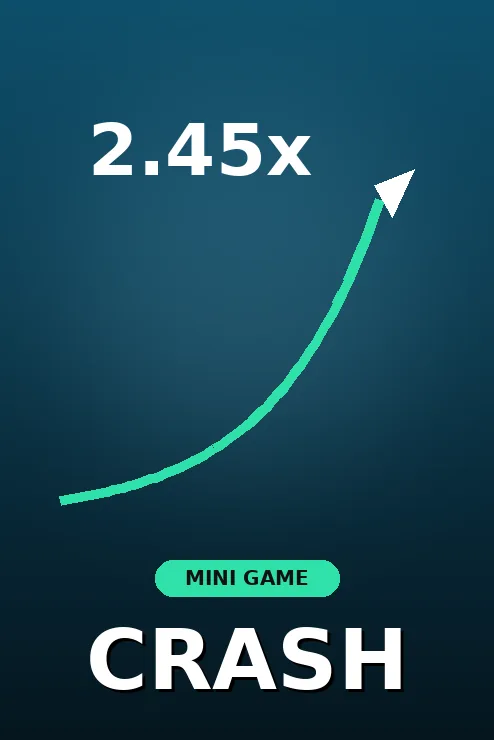
A multiplier starts at 1x and rises continuously until it breaks off at a random point. Cashing out before that moment pays the stake multiplied by the current value. Waiting too long means losing. Many games of this kind allow an automatic cash-out at a value set in advance. This concept is perhaps the most exciting in the whole genre, because every second of hesitation counts.
The falling ball and the pin board
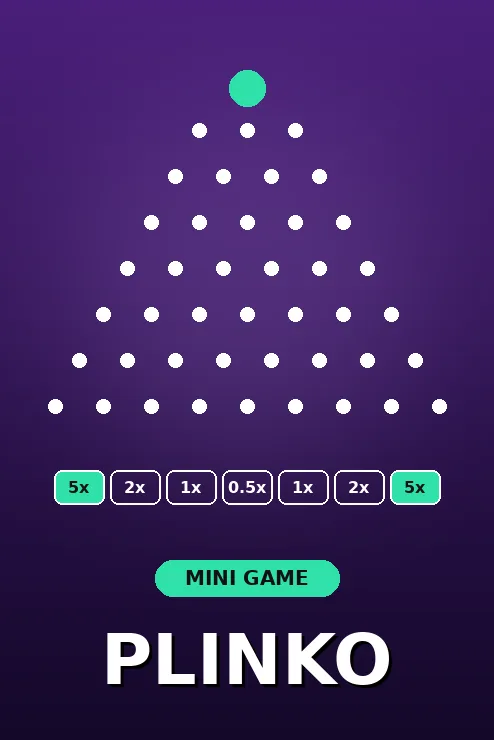
A ball falls through a field of pins and bounces left or right until it lands at the bottom in a slot with a certain multiplier. The small values are usually in the middle, the big ones at the edges. Often the number of rows and a risk level can be set, which determines how extreme the values at the edge turn out.
Rolling dice against a self-chosen threshold
The player chooses a number and decides whether the result should be above or below it. The less likely the choice, the higher the possible payout. The concept is particularly transparent mathematically, because the probability of winning and the multiplier can be read off directly.
Higher or lower with face-up cards
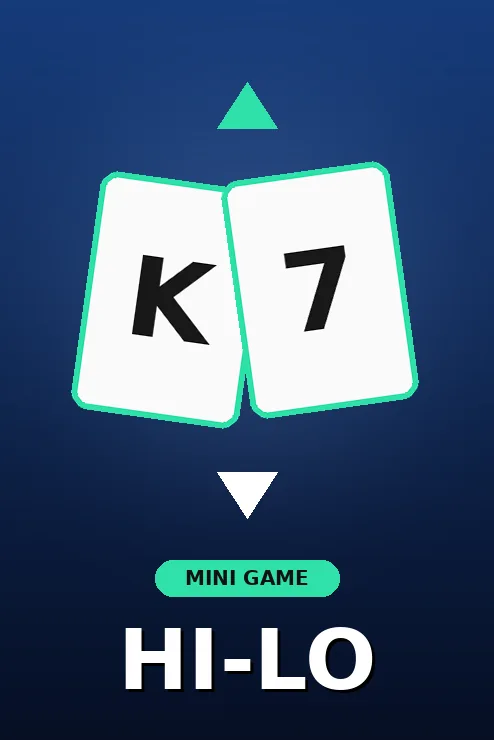
A card lies face up, and the guess is whether the next one will be higher or lower. Every correct prediction raises the win, a mistake ends the round. Many variants allow cashing out after every guess. The concept is ancient and works so well precisely for that reason: everyone knows it from childhood.
A target multiplier before the start
In this type of game, a target is set before the round, such as 2x or 10x. If the random result reaches this value, the payout follows accordingly; otherwise the stake is lost. Unlike the rising multiplier, there is no decision during the round here, only before it.
Floor by floor to the top
A tower consists of several levels, each with safe and unsafe fields. With every level passed, the multiplier rises. Choosing a wrong field means falling down. Here too, cashing out is possible at any time, and here too the chosen difficulty decides how many unsafe fields lie on each level.
Drawing numbers like a lottery
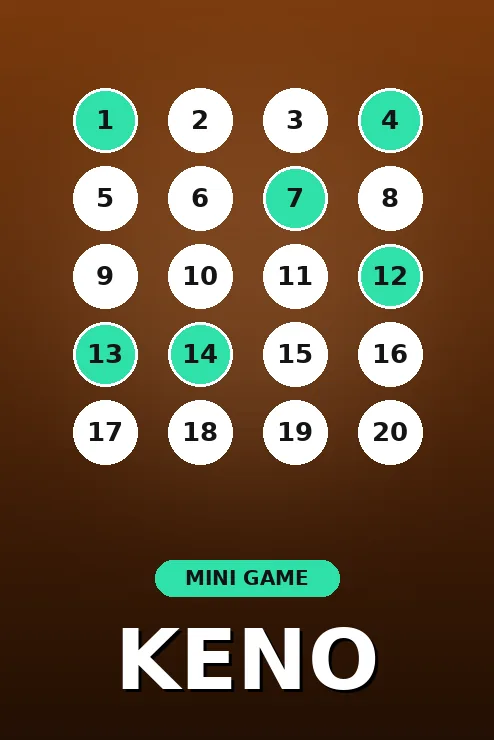
In lottery-like games, several numbers are selected, and then the game draws a series of hits. The more matches, the higher the win. These games are somewhat calmer than the other Mini Games, because the draw takes a moment.
Which game type suits which temperament
Each of these concepts feels different. A small classification from our experience:
- For the calm: dice with a low target and lottery-like draws. The rounds are manageable and the results less extreme.
- For the deliberate: revealing fields and tower games. After every step the question "continue or cash out?" hangs in the air.
- For adrenaline lovers: the rising multiplier. No other concept packs so much tension into a few seconds.
- For the nostalgic: higher or lower with cards. Familiar, simple and still exciting.
- For spectators: the falling ball. There is hardly anything more relaxing than watching a ball bounce.
Of course it is worth trying several game types. We only recommend starting with very small stakes until a feel for pace and volatility has developed.
The settings before every round
What sets Mini Games apart from most slots are the settings. Understanding them makes for more conscious play.
Difficulty and risk level
In many Mini Games it is possible to set how risky a round should be. More mines, more unsafe fields, more extreme values at the edge of the pin board: all of these settings increase the possible payout and at the same time lower the chance of reaching it. A lower level means more frequent but smaller wins.
Automatic cash-out at a fixed value
With the rising multiplier, a value can often be stored at which cashing out happens automatically. This feature is not only convenient, it also protects against one's own hesitation. Anyone who has resolved to cash out at 2x and then does not, because the value is rising so nicely, knows the problem.
Autoplay only with clear limits
Some Mini Games offer a feature for automatic rounds. Our clear advice: use this feature only with fixed stop conditions, such as a maximum number of rounds and a loss limit. Without such limits, hundreds of rounds run through in a few minutes, and control is lost.
The size of the stake
Mini Games often allow very small stakes. That is an advantage for anyone who wants to play many rounds with little money. At the same time, a small amount seems harmless, even though it adds up quickly over a high number of rounds.
Multiplier and probability: a worked example
The relationship between multiplier and chance of winning can be shown well with the dice concept, because both values are visible there.
Suppose a game pays out at a target of 2x. Without a house edge, the probability of winning would have to be exactly 50%. In reality it is slightly lower, and exactly this small gap is the house edge. With a target of 10x the probability falls to just under 10%, with 100x to just under 1%.
Two insights follow from this. First: a higher target is not "better" or "worse", it only distributes the risk differently. Second: over many rounds, the result approaches the house edge, no matter which target is chosen. No multiplier turns a game of chance into a sure thing.
Thoughts on the right cash-out point
In many Mini Games, the most important decision is not the stake but the moment of stopping within a round. Revealing fields, climbing floors, watching a rising multiplier: the question always arises whether to go one step further.

Psychologically, this is a tricky situation. After three safe fields, the fourth feels almost a given, even though the probability of hitting a mine actually rises with every revealed field, because fewer safe fields remain. With the rising multiplier, on the other hand, an early cash-out often causes annoyance when the value keeps climbing for a long time afterwards. This annoyance tempts players to wait longer in the next round.
We therefore think highly of fixed rules made before the session. For example: with the mines concept, always cash out after three fields. With the multiplier, always at 2x. Such rules take a little spontaneity out of the game but ensure that decisions are not made on gut feeling and under pressure. Also important: a cash-out point that was "too early" in the previous round is just as right or wrong in the next round as before. The game has no past.
The house's built-in advantage
Every casino game has a house edge, Mini Games included. It is the reason a casino can exist at all in the long run. With many Mini Games this edge is comparatively small and transparent, which is one of the reasons for their popularity.
Small, however, does not mean zero. Anyone who plays a thousand rounds mathematically gives up a small percentage of the total stakes. With very fast games, a thousand rounds are reached faster than it feels. That is why the house edge in Mini Games has more effect through the number of rounds than through the individual stake.
The exact return to player, if the studio states it, is in the info menu of the respective game. Reading it takes less than a minute.
The number of rounds as an underestimated factor
A thought experiment makes clear why we talk about pace so often with Mini Games. A classic slot with animations manages perhaps ten to fifteen spins per minute. A Mini Game with an instant result can achieve many times that, especially with automatic rounds.
With a stake of 50 cents and 30 rounds per minute, €150 is wagered in ten minutes. Even with a low house edge, that is a sum many do not expect from a "quick game in between". We address this openly because we do not want anyone to be surprised by this calculation.
Our recommendation is therefore: with Mini Games, set not only a money budget but also a round budget. For example 100 rounds, then a break. That seems strict, but it ensures that the fun does not turn into hectic play.
Three sessions, three approaches
To show how differently Mini Games can be used, we describe three fictional but realistic sessions.
The coffee break: €10 budget, 10 cent stake, dice concept with a low target. After 50 rounds it is over, no matter what the balance looks like. The result is usually a small plus or minus, and the break was entertaining.
The evening of excitement: €30 budget, 50 cent stake, rising multiplier with automatic cash-out at 3x. In addition a fixed loss limit of €20. If it is reached, the session ends. If a win is achieved, the original plan still stands.
Trying things out: €5 budget, smallest stake, ten rounds each in five different game types. The goal is not winning but finding out which concept is the most fun.
All three sessions have in common that budget and end are fixed beforehand. That is exactly what distinguishes relaxed play from play that takes on a life of its own.
Mini Games alongside roulette and blackjack
Anyone who already knows table games will find many familiar ideas in Mini Games. Rolling dice against a threshold is reminiscent of a bet on red or black at roulette, except that the probability can be chosen freely. The higher-or-lower concept resembles the weighing up in blackjack of whether to draw another card.
The big difference lies in the rhythm. At a roulette table, whether digital or live, there is a natural pause between rounds: the ball has to roll, the dealer has to pay out. With many Mini Games this pause is missing, and the next result is there immediately. On top of that, in Mini Games the risk can be changed within a round, while in roulette it is fixed once the chips are placed.
For players who switch between both worlds, this leads to a simple rule of thumb: play Mini Games deliberately more slowly than the game would allow. Taking a short breath between two rounds keeps control much better. Anyone who prefers the calmer pace will find a good alternative in the digital table games of our games overview.
Look, sound and rhythm
Even if Mini Games seem plain, a lot of thought goes into their design. Colours change as the multiplier rises, tones get higher the longer a round runs, and a small animation celebrates every safely revealed field. These elements make the game lively, but they also reinforce the feeling of absolutely wanting to keep playing.
We think it is important to know this. A sound that creates tension is a design element and not an indication of a chance of winning. Many games allow the sound to be switched off. Anyone who notices that the background music drives their pulse up can try a round without sound. Surprisingly often, the game becomes more pleasant and the decision clearer.
Notes on one's own session
A simple tool we recommend to all Mini Games fans is a short note for every session: starting balance, rounds played, final balance, duration. That takes a minute and, over a few weeks, gives an honest picture of one's own playing behaviour.
Precisely because Mini Games rounds are so short, a distorted impression arises quickly. Individual big hits stick in the memory, the many small losses in between do not. Writing the numbers down shows the actual course and makes it possible to adjust budget and number of rounds accordingly. The transaction overview in the account provides the deposits, and a notepad or a spreadsheet on the phone does the rest.
Mini Games on the phone
Mini Games are made for the smartphone. The plain playing field fits easily on a small screen, and the controls are limited to a few taps. Via our web app they run on iOS and Android directly in the browser, without a download from a store.
On the go, however, caution is advised. An accidental double tap quickly starts an extra round, and distractions on the train or in a waiting room make it easier to forget one's own limit. Our advice: check the settings for risk and automatic cash-out before starting, and on mobile it is best to leave automatic rounds out entirely.
When a win shakes up the plan
Losses are not the only danger for a planned evening. An early, large win can just as easily cause limits to blur. Suddenly having three times the starting balance on the account after five rounds quickly feels like playing with "someone else's" money. It is exactly this feeling that tempts players to raise stakes or turn up the risk level.
We see this often in everyday life, and our advice is simple: a win is one's own money like any other. Many players therefore decide in advance that part of a win is set aside immediately, perhaps half, and only the rest stays in play. Others end the session as soon as a certain target is reached. Both approaches work, as long as they are fixed before the start and not invented in the euphoria of the moment.
Who the genre is less suited to
As much fun as Mini Games can be, they do not suit everyone. Anyone who tends to want to top up immediately after losses finds a particularly difficult environment in the fast rhythm of these games. The same applies to anyone who likes to switch off while playing and forget the time. What is pleasant with an audiobook can become expensive with games that have rounds lasting seconds.
For these players we recommend forms of play with natural pauses, such as live tables with a dealer or slots with longer animations. The Battles in our tournaments also have a clear beginning and a clear end, which helps some players to structure their time. And anyone unsure whether their own gambling is still in the green zone will find an honest assessment in the self-test at check-dein-spiel.de.
What makes a good Mini Game
Not every game in the genre is equally successful. In our view, there are a few features by which a good Mini Game can be recognised.
First, clear rules that can be summarised in a few sentences in the info menu. If a game needs several pages of explanation, it is strictly speaking no longer a Mini Game. Second, comprehensible settings: changing the risk level should immediately show how possible payouts shift. Third, a stated return to player, so that the game can be compared with others. And fourth, controls that avoid accidental rounds, for example through a well-placed start button.
We pay attention to exactly these points when selecting games for our tab. And we welcome feedback in the live chat if, from our players' point of view, a game does not meet these standards.
A word on stake limits per round
Every Mini Game has a smallest and a largest possible stake. The range is stated in the game itself and differs from title to title. For beginners, the smallest stake is of particular interest, because it allows the game concept to be explored with almost no risk.

The largest stake, on the other hand, we see more as a technical upper limit than a recommendation. In a game with very many rounds per minute, high stakes are particularly risky, because fluctuations add up to large amounts in a very short time. Anyone using a bonus should also know the rules on stake limits during an active bonus phase in the bonus terms.
Mini Games in the weekly rhythm
For many of our regulars, Mini Games have a fixed but limited place in the week. A common pattern: on Monday, after the cashback has been credited, a few calm rounds; on Wednesday the free spins on a slot; and at the weekend a longer session with a fixed budget. This distribution means the fast format provides variety without dominating the whole of everyday play.
Anyone who handles it this way uses Mini Games like a spice: a pinch makes the dish more exciting, too much overpowers everything else. A fixed place in the calendar also helps to experience the game as a conscious leisure activity and not as something that slips into every spare minute on the side.
Mini Games and bonus funds
Anyone using a bonus from the welcome package or a reload should know that not every game contributes equally to wagering. How Mini Games are weighted is stated in the full bonus terms. The "Bonus Wagering" lobby category also shows which titles are suitable for completing outstanding wagering.
Our practical note: as long as a bonus is open, it is worth checking briefly before every Mini Games round whether the chosen game appears in this category. Otherwise play happens without the wagering bar moving. For players who mainly like Mini Games anyway, the weekly cashback is often the more pleasant addition, because it works independently of game weighting. More on this in our VIP Club with a rising cashback rate.
Between Mini Games, Battles and weekly promotions
Mini Games do not stand in isolation at EgoGames. Collected credits flow into the Coin Shop as usual during play, and the weekly cashback takes all rounds of a week into account. Anyone looking for variety in between will find a completely different kind of excitement in our Battles with a live leaderboard, though there on selected slots.
Our weekly promotions, in turn, revolve mostly around free spins for well-known slots. Many players combine both: free spins on Sweet Bonanza on Wednesday, then a few calm rounds in the Mini Games tab. This mix brings variety without any single form of play taking up too much space.
Six widespread misconceptions
Stubborn assumptions circulate around Mini Games, and we like to set them straight.
"After many losses, a high multiplier is coming soon." No. Every round is independent. The game does not remember previous results.
"With the right strategy, a win is certain." Also no. Strategies such as doubling after losses only change how quickly the budget fluctuates, not the house edge.
"Small stakes are harmless." Only if the number of rounds also stays small. Many small stakes add up to a large sum.
"Cashing out early means no losses." An early cash-out lowers the risk per round, but not to zero, and over many rounds the house edge still takes effect.
"Certain times of day are more favourable." The random number generator knows no time of day.
"Other players are winning a lot right now, so the game is running well." Other people's results have no influence whatsoever on one's own next round.
Terms that come up again and again in Mini Games
Opening the info menu of a Mini Game brings up a few recurring expressions:
- Multiplier: the factor by which the stake is multiplied in the event of a win.
- Target or threshold: a value set in advance from which a round counts as won.
- Cash out: ending a running round with the current win.
- Risk level: a setting that shifts the ratio between chance of winning and payout.
- Automatic rounds: a feature that plays several rounds in a row without another click.
- Stop condition: a limit at which automatic rounds end, for example after a loss amount.
- House edge: the long-term share of stakes that mathematically stays with the casino.
With these terms in mind, the rules of every new title can be understood in a short time.
How we look after the Mini Games tab
The Mini Games section is not an add-on with us, but a tab of its own with its own logic. We make sure that the titles included have clear rules that are described understandably in the info menu. Games whose risk settings can be explained comprehensibly are particularly important to us.
As in the whole lobby, the titles come from studios whose games work with random number generators. Nobody at EgoGames can influence the outcome of a round. New games are added to the section regularly, and the "New" lobby category shows them together with all other releases.
Getting started in seven steps
For everyone trying a Mini Game for the first time, a simple sequence:
- Set a budget that can be lost completely without it hurting.
- Decide on the number of rounds, for example 50 or 100 rounds for the first session.
- Choose a game concept, ideally one with little volatility at first.
- Read the info menu to know the rules, settings and return to player.
- Choose the lowest risk level and start with the smallest stake.
- Switch off automatic rounds until the game is familiar.
- Really stop at the end, even if the last round was a win.
Following these steps makes it possible to get to know the genre calmly and to notice quickly which game type is enjoyable.
When a break is the best decision
Mini Games can be particularly gripping because of their pace. That is why it is worth knowing a few warning signs. These include the feeling of absolutely having to keep playing immediately after a loss, constantly raising the risk level to make up for losses faster, or the moment when the planned number of rounds has long been exceeded without it being noticed.
Anyone who recognises themselves in this is best off taking a real break, meaning putting the device aside and not just switching to another game. A self-exclusion can be set up at any time via our live chat. All information on this is on the page about responsible gambling. Free and anonymous support is available from the BZgA, the German gambling addiction helpline, on 0800 1 37 27 00 and at check-dein-spiel.de.
Frequently asked questions
Where can the Mini Games be found on egogames1.com?
The lobby has a separate tab for Mini Games. The section can also be reached via the navigation of our games page.
Which game concepts are available in the Mini Games tab?
Typical concepts are revealing fields with hidden mines, rising multipliers with a cash-out, falling balls on a pin board, rolling dice against a threshold, higher or lower with cards, tower games and lottery-like draws. The tab in the lobby shows which titles are currently available.
Can the risk be adjusted in Mini Games?
In many games, yes. Depending on the title, the number of mines, difficulty, number of rows or an automatic cash-out value can be set. Higher risk means a higher possible payout with a lower chance of winning.
Is there a strategy that wins reliably at Mini Games?
No. Every round is independent, and the house edge remains. Strategies only affect how much the balance fluctuates, not the probabilities.
How do Mini Games count towards bonus wagering?
The weighting of the individual game types is stated in the bonus terms. The "Bonus Wagering" lobby category shows all titles that are suitable for outstanding wagering.
Enjoying small games with a plan
Mini Games show how much excitement a single mechanic can hold. With a clear budget, a fixed number of rounds and sensible settings, they remain what they are meant to be: an entertaining pastime played second by second.
18+ | Gambling can be addictive. Please play responsibly. Help: BZgA, the German gambling addiction helpline, on 0800 1 37 27 00 and check-dein-spiel.de