




A slot is usually a fairly private affair. Reels spin, a result appears, the next round follows. Nobody else notices whether a bonus game has just been triggered or whether the evening is dragging. With our tournaments, we bring a bit of community into this experience. On egogames1.com they are called Battles, and the principle is quickly told: several players compete on the same selected games, a leaderboard shows the standings continuously, and at the end the best places share a prize pool.
Why do we enjoy this so much? Because it suddenly makes a perfectly normal session feel different. A medium win that would otherwise hardly stand out can move a player a few places up in a Battle. And a quiet evening gains a tension arc that does not depend on the size of the stake but on how the result compares with everyone else's.
On this page we explain how our Battles are structured, how the scoring is read, which games count and what we ourselves look out for before signing up for a competition. Anyone who first wants to know which titles we have at all will find the complete catalogue in the EgoGames games overview. All tournaments are aimed exclusively at players aged 18 and over.
The basic idea behind our Battles
A Battle is a time-limited competition. It has a fixed start, a fixed end, a list of scored games and a rule by which points are earned. At its core, nothing more is needed. Everything else, meaning format, duration, prize pool and number of prize ranks, we set individually for each Battle and write on the associated tournament card.
One idea is important to us here: a Battle does not change the games themselves. A slot scored in a tournament works exactly as it does outside the tournament. Same return to player, same volatility, same special features. The tournament merely lays a second level over it, namely the question of how one's own result compares with other participants.
This point sounds trivial but is often overlooked. Anyone who believes that a game pays out more generously during a Battle is mistaken. The studios' random number generators know nothing about leaderboards. In our view, that is exactly what makes tournaments fair: all participants play under the same conditions, and in the end the result of the rounds decides, not a hidden advantage.
Competition without an opponent at the table
Unlike poker, the participants of a Battle do not play directly against each other. Nobody can take anything away from another player, nobody bluffs, nobody has to wait for a fellow player's decision. Everyone spins for themselves, and the leaderboard sorts the results. It could be compared to a golf tournament: everyone plays their own ball, but in the end the table counts.
For many of our players, that is exactly the appeal. There is a competition, but no pressure from an opponent. Anyone who wants a break in between takes a break. Anyone who loses interest after ten minutes simply drops out. The leaderboard keeps running, but nobody is waiting.
Anatomy of a tournament card
Every Battle at EgoGames has its own tournament card. It is the most important document of a competition, and we recommend reading it in full before the first scored round. The card usually contains the following details:
| Detail | What it means |
|---|---|
| Name of the Battle | usually a theme or an occasion, such as a seasonal festival |
| Start and end | date and time, always in German time |
| Scored games | the titles whose rounds count towards the leaderboard |
| Scoring type | the rule by which points are earned |
| Minimum stake | from which stake a round is counted |
| Prize pool | the total value of all prizes in this Battle |
| Prize ranks | how many places receive a prize and how much |
Knowing these seven points basically covers everything needed to take part. The rest is playing.
Understanding the prize pool correctly
A prize pool is the total value of all prizes in a Battle. It is divided among several places. An example from our tournament calendar was the Shamrock Wins Festival with a prize pool of €2,000. This sum did not go to a single person but was distributed among the best ranks according to the published breakdown.
That is a detail we like to emphasise, because it prevents false expectations. A large prize pool initially says something only about the total. How much of it falls to an individual rank is stated in the prize table on the tournament card. In some Battles the gap between first place and the lower prize ranks is large, in others the pool is spread more widely, so that more participants receive something.
The stake threshold for scoring
Many Battles specify from which stake a round counts towards the scoring. Rounds below it are played and paid out quite normally but do not count for the leaderboard. This rule prevents a tournament from being decided by tiny amounts in endless rounds and ensures comparable conditions.
For us, this means one thing above all: check the minimum stake before starting and then consider whether this stake fits one's own budget. If not, the Battle is simply not the right format for that evening. That is not a defeat but a sensible decision.
Finding tournament games in the menu
On egogames1.com, the tournaments are linked to a dropdown that shows all games currently scored in at least one Battle. A click on a title leads straight to its game information. In addition, the lobby has a separate section for tournament games, so that the scored titles can be reached from both sides.
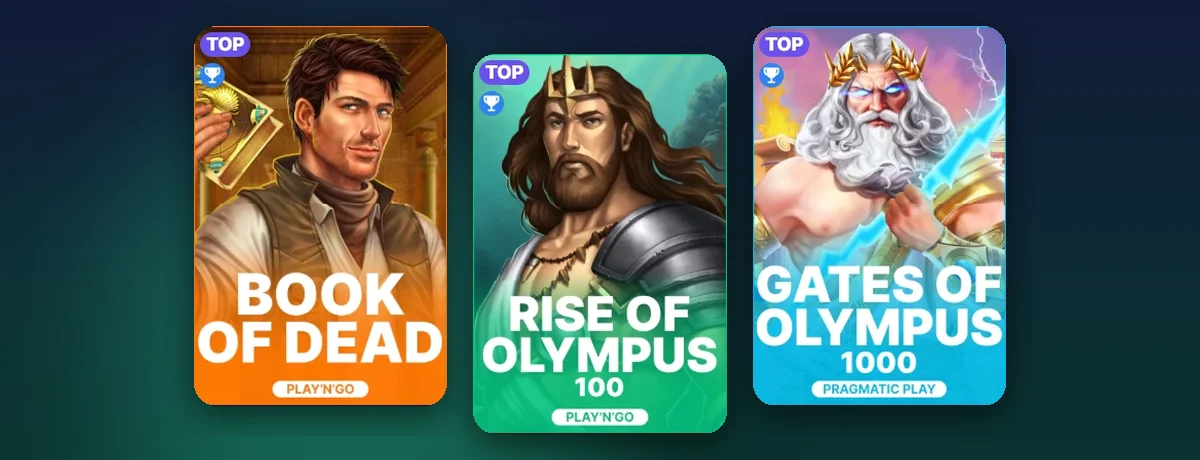
This double accessibility has a practical reason. Many players do not start on the tournament page but browse the lobby first. If they spot a title there that is currently running in a Battle, they should be able to recognise it immediately. Conversely, nobody coming from the tournament page should have to search for long.
Before starting: the info menu instead of gut feeling
Opening a game from the tournament dropdown is quickly done. We nevertheless advise spending a moment in the game's info menu before the first scored round. It states the return to player, ways to win, special features and the rules for free spins. This is particularly worthwhile with titles that were previously unknown, because the scoring type of a Battle does not suit every game equally well.
An example: if a Battle scores by the highest multiplier of a single round, slots with big swings play a different role from calm titles with many small wins. Anyone who knows the info menu understands more quickly what is realistic in this Battle and what is not.
One title in several Battles
It happens that a slot is scored in several Battles at the same time. In this case a round can count for each of these Battles, provided participation is active and the respective conditions are met. Whether this is the case is stated on the tournament cards. We recommend looking closely at such overlaps, especially at the minimum stake, which can differ from Battle to Battle.
Scoring types and what they mean in play
The scoring type is the core of every Battle. It determines which rounds are particularly valuable and which barely matter. At EgoGames there are different variants, and which one applies is always stated on the tournament card. Here are the common principles, so that the details can be placed quickly.
Points by win amount
In this variant, the amount paid out in a round counts. Anyone who achieves high wins collects many points. That sounds simple but has a side effect: higher stakes lead to higher wins at the same multiplier. This scoring type therefore tends to favour players with larger stakes. We say so openly, so that nobody is surprised if the leaderboard develops in that direction.
Points by multiplier
Here the ratio of win to stake counts. A win of €40 at a 20 cent stake corresponds to a multiplier of 200x and is therefore worth more than a win of €100 at a €2 stake, which corresponds to only 50x. In our view this variant is the most balanced, because it makes small and large stakes comparable. Here the result counts, not the account balance.
Points by number of rounds
Some Battles score the number of rounds played. Whoever spins the most is in front. This scoring type is rarer, and we have a clear stance on it: it should never be the reason to play longer or more often than planned. Anyone taking part in such a Battle sets a fixed number of rounds or a fixed budget beforehand and then stops, no matter which place.
Mixed and special rules
Occasionally we combine elements, for example by counting only a participant's best rounds or by awarding extra points for certain events such as triggering a bonus game. Such special rules are always set out in detail on the tournament card. Anyone who does not understand a rule straight away is best off asking briefly in the live chat before the first scored round starts.
Thinking about scoring type and volatility together
One point that is surprisingly rarely discussed in our chat is the interplay between scoring type and the character of a game. Yet it is precisely this combination that decides how a Battle feels.
| Scoring type | Calm slots with many small wins | Wild slots with rare big hits |
|---|---|---|
| Multiplier of one round | rather hard to reach the top | a single hit can be enough |
| Sum of wins | steady build-up over the duration | big jumps, but also long idle phases |
| Number of rounds | budget lasts longer | budget can be used up faster |
This table is not a strategy but an orientation. No slot guarantees a particular course. It does, however, help to have realistic expectations. Anyone choosing a calm title in a multiplier Battle should not be disappointed if the top remains out of reach. And anyone betting on a highly volatile slot in a sum-based scoring must expect long phases without notable progress.
Our personal preference: for short evening formats, we like to reach for slots with medium volatility. They bring enough movement to the leaderboard without using up the budget in ten minutes.
How we select the games for a Battle
The list of scored titles does not come about by chance. When planning a Battle, we make sure that the games suit the format, that they run well in our lobby and that they are accessible to as many players as possible. A tournament that takes place on a single niche title appeals to hardly anyone.
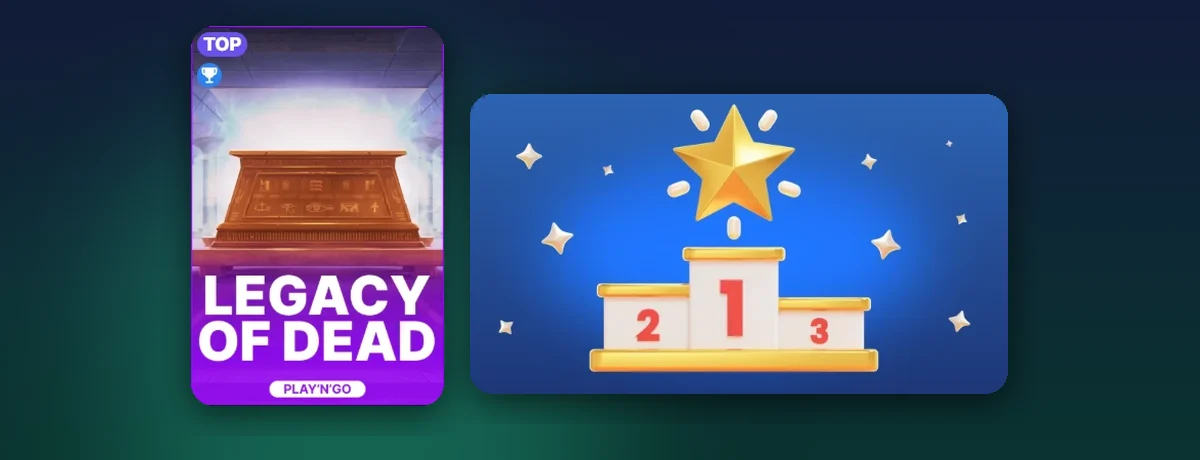
At the same time, we deliberately choose a limited number of titles. If all games in the lobby counted, the results would hardly be comparable, because slots differ greatly in payout structure and multipliers. A manageable selection ensures a fair competition in which all participants compete under similar conditions.
With themed festivals, the motif also plays a role. Slots with four-leaf clovers and leprechauns simply suit a festival such as Shamrock Wins better than a space adventure. Details like these make the difference for us between a tournament and an experience.
Learning to read the leaderboard
The live leaderboard is the most visible element of every Battle. It shows the current place, the points and the gap to the surrounding ranks. At first sight this seems clear, but it tells only part of the story.
First, the leaderboard is a snapshot. As long as a Battle is running, other participants can collect points at any time. Third place in the afternoon says little about the final standings in the evening.
Second, its significance depends heavily on the scoring type. With multiplier scoring, a single big hit by another player can shift the table completely. With scoring by win amount, the top often changes more slowly, but continuously.
Third, results are checked before prizes are awarded. Only after the end of the Battle and the completion of this check are the final standings settled.
A thought on psychology
Leaderboards have an effect of their own. A place just behind the prize ranks almost automatically creates the thought that only one good hit is missing. We know this thought from many conversations with players, and we consider it dangerous when it shifts the budget. In a game of chance, the next hit is not more likely just because it is needed right now.
Our recommendation: treat the leaderboard as entertainment, not as an assignment. Anyone who has decided beforehand with which amount to enter a Battle sticks to it. 12th place with the budget kept is a better evening than 8th place with a hole in the monthly budget.
Three player types and their Battles
Not every Battle suits every player. From our experience, roughly three types can be distinguished, and each finds a suitable format at EgoGames.
The after-work player
Anyone who plays for half an hour after work gets little out of a Battle that stretches over a whole week and rewards stamina. For this type, short evening formats with multiplier scoring are ideal. A good hit can be enough, and after the planned half hour the evening is over regardless.
The collector
Some players prefer to take part in small stages over several days. Weekly leaderboards, where points add up over the entire duration, suit them. Here regularity counts more than a single lucky hit. It is important to set a weekly framework for this too, so that regularity does not turn into compulsion.
The theme fan
Themed festivals such as the Shamrock Wins Festival appeal to players who fancy a particular atmosphere. Slots with a matching motif are often scored. For theme fans, the Battle is more an occasion to discover new titles than a serious competition, and that is exactly how it may be played.
A tournament evening, told step by step
How this looks in practice is best shown by a fictional but typical evening. Suppose a player has set aside €30 for the evening and sees a Battle with multiplier scoring on the tournament page that started at 18:00 and ends at 23:00.
First she reads the tournament card. The minimum stake is low enough that €30 is enough for a decent number of scored rounds. She knows some of the scored games, one title she does not. She opens its info menu and finds that it is highly volatile and makes big multipliers possible.
Then she checks in the account whether her participation is active and starts with the familiar title. After twenty minutes she is in a middle place. A small bonus game moves her up a little. Around 21:00 about €20 has been used, and her placing barely moves any more.
At this point, what we consider decisive happens: she looks at her budget, not at the leaderboard. She plays the remaining €10 calmly on the new title, and the evening ends in 27th place without a prize. She has found a new candidate for a favourite slot, enjoyed two entertaining hours and spent not a single euro more than planned. For us, that is a successful tournament evening.
Taking part in practice
So that a Battle runs smoothly, here is the process in the order that has proven itself with us:
- Open the tournament page: the page of the running Battles shows all current competitions with their cards.
- Read the tournament card in full: duration, scoring, minimum stake, scored games and prize table.
- Confirm participation: depending on the Battle, registration is required or participation begins automatically with the first qualifying round. The card says which applies.
- Check the status: the account shows whether participation is active. Without an active status, rounds do not count.
- Start the game from the dropdown: that way it is certain to be a scored title.
- Stick to the budget: do not exceed the amount set beforehand, regardless of the place.
Time zones and times
We state all Battle durations in German time. That sounds obvious, but it prevents a classic misunderstanding. A tournament ending at midnight is only unambiguous if it is clear which midnight is meant. At EgoGames it is always German midnight.
We adjust the times accordingly for summer and winter time. Anyone playing on the go in another time zone should quickly work out the difference, so that no round is played after the tournament ends in the belief that it still counts.
Another note from practice: rounds played shortly before the end of a tournament only count if they are completed before the end. Anyone who triggers a free spins round in the last minute that only ends after the deadline should not expect the entire result to be scored. The exact rule is on the tournament card.
What happens after the tournament ends
When a Battle ends, the leaderboard freezes. Then the results are checked before the prizes are awarded. This check serves to protect all participants and ensures that the scoring has come about correctly and in accordance with the rules.
The prizes are then credited according to the published table. In what form this happens, whether as real money, bonus funds or free spins, is also stated on the tournament card. If a prize is awarded as bonus funds, the conditions stated there apply.
A tie on a prize rank
With some scoring types it can happen that two participants reach exactly the same score. For this case, every Battle sets a rule that is stated on the tournament card. A common solution is that the participant who reached the score first is placed ahead. If anything is unclear, our support helps.
Tournaments and other building blocks at EgoGames
Battles do not stand in isolation next to the rest of the offer. They are an additional level on top of normal play. Anyone playing during a Battle is at the same time playing quite normally in our casino, and the usual rules for stakes and wins apply unchanged.
Battles and an active bonus
A frequent question in the chat concerns the interplay with an active bonus. As a basic rule: whether rounds with bonus funds count for a Battle is governed by the respective tournament card. Conversely, the game weighting from the bonus terms applies to bonus wagering. A slot can therefore count for a Battle and contribute to wagering at the same time, provided both sets of rules allow it.
Our advice: with an active bonus, compare both sets of rules briefly before the tournament starts. That way no false picture arises of what a round counts for.
Battles and weekly promotions
Alongside the tournaments, fixed promotions run every week with us, from the Wednesday reload to the cashback. Exactly which they are is explained on the page with our weekly promotions and reloads. A Battle does not replace any of these promotions; it complements them. Anyone who gets free spins on Wednesday while a Battle is running on the same slot should check the tournament card to see whether free spin rounds are scored.
Battles and the VIP Club
Anyone who plays regularly in Battles also plays regularly at EgoGames, and like any other play this affects the weekly cashback, provided there is a net loss at the end of the week. How our loyalty programme works overall and which rates exist is explained in detail in the EgoGames VIP Club.
Mini Games and tournaments
Our Mini Games section, with fast rounds and clear mechanics, is a world of its own. Whether Mini Games are scored in a Battle depends on the respective competition and is stated on the tournament card. Most of our Battles focus on slots, because their results can be compared well via multipliers and win amounts.
Anyone who likes Mini Games and enjoys playing competitively keeps an eye on the tournament dropdown. As soon as a Mini Game is scored, it appears there.
Why some players prefer to skip tournaments
Not everyone likes competitions, and that is perfectly fine. Some players find a running leaderboard distracting because it turns a relaxed session into a kind of race. Others prefer to play in the live casino or at digital tables, which are rarely scored in our Battles.
For these players, nothing changes at EgoGames. The lobby, the promotions and the cashback work completely independently of the tournaments. Anyone who never takes part in a Battle misses no fixed part of our offer but merely skips an optional extra. We see tournaments as an additional door, not as a compulsory path through the casino.
Tournaments on the go
Our Battles work on a smartphone exactly as they do on a computer. The egogames1.com web app shows the tournament page, the tournament cards, the live leaderboard and the dropdown in a display adapted for small screens.
From experience, we offer two notes to take along. First: tournament cards with many special rules are somewhat more tedious to read on a phone. Anyone with time is best off reading them calmly beforehand. Second: an unstable connection shortly before the end of a tournament can mean that a round is not completed in time. Anyone who knows they are about to go into a tunnel is better off playing the last scored round beforehand.
What a tournament cannot do
We believe that good tournaments also speak honestly about their limits. So here are a few things a Battle at EgoGames deliberately does not do.
A Battle does not increase the chances of winning. The games work as always, and every round is independent of the previous one.
A Battle is not a way to make up for losses. A prize rank can be a nice bonus, but entering a tournament to win back a loss from the day before means exposing oneself to a double risk.
A Battle commits nobody to anything. Anyone who has signed up and notices after three rounds that the format is no fun simply stops. There is no penalty and no disadvantage.
And a Battle says nothing about the quality of a player. In games of chance, the luck of the rounds decides in the end. Whoever wins was lucky. Whoever does not win was not. Both are perfectly fine.
Mistakes we often see
From many tournament weeks we know the stumbling blocks participants trip over most often. The good news: almost all of them can be avoided with little effort.
- Rounds on a title that is not scored: a slot with a similar-sounding name is not automatically part of the Battle. The dropdown provides clarity.
- Stake below the minimum: rounds below the minimum stake do not count. Anyone wondering why the points are not rising should check the stake first.
- Participation not active: in Battles with registration, rounds only count after registering.
- Time zone misjudged: all times apply in German time.
- Budget aligned with the leaderboard: the most consequential mistake of all. The limit is set beforehand, not during play.
Fairness in our Battles
So that tournaments work the same for all participants, a few principles apply at EgoGames. Every player takes part with exactly one account, as our terms and conditions provide anyway. The rules of a Battle are published before the start and are not changed to the participants' disadvantage during the running time. Results are checked before prizes are awarded.
Should a technical fault occur during a Battle, for example because a scored game is temporarily unavailable, we provide information via the tournament page and support. Anyone who has the impression that a round was scored incorrectly gets in touch with the game title, time and, if available, round number via our contact to the support team.
Playing tournaments with good sense
Battles are meant to be fun. To keep it that way, we have a few simple guidelines that we recommend to all participants:
- set a fixed budget before every Battle and stick to it regardless of the place
- set an end time for the evening that does not depend on the end of the tournament
- choose formats that fit one's own everyday life instead of rearranging everyday life for the sake of a format
- see prizes as a pleasant surprise, not as a goal that has to be reached
- take a deliberate break after a Battle before the next one begins
Anyone who notices that tournaments lead to a feeling of pressure should take a step back. Information on warning signs and support services is summarised on our page about responsible gambling at EgoGames. Free and anonymous help is offered by the BZgA, the German gambling addiction helpline, on 0800 1 37 27 00, and by the check-dein-spiel.de portal with a self-test and counselling programme.
Frequently asked questions
Is there an extra charge for a Battle?
There is no separate entry fee for our Battles. Normal rounds on the selected games are scored, played at the usual stake. The tournament card states which conditions apply in detail.
How can it be seen whether a game is currently being scored?
All currently scored titles are listed in the tournament dropdown and in the lobby section for tournament games. In addition, every tournament card lists its scored games. Only rounds on these titles count for the respective Battle.
Do free spin rounds count for the leaderboard?
That depends on the individual Battle. Some score free spin rounds, others do not. The binding rule is on the tournament card, and if in doubt our live chat clarifies the question before the start.
How long does a Battle last?
The duration varies. There are short formats over one evening, weekly leaderboards and themed festivals over several days. Start and end are stated on every tournament card in German time.
What happens if the connection drops during a scored round?
A round that has started is usually completed on the server side and booked quite normally. Whether it still counts towards the scoring depends on whether it was completed before the end of the tournament. If anything is unclear, the game title, time and round number help support to clarify the matter.
Ready for the next competition
Our Battles run in changing formats, and almost always there is a leaderboard moving somewhere. Anyone in the mood for a competition looks at the tournament page, reads the card and starts with a clear budget. And anyone who simply wants to play will find more than enough titles in our lobby, without any table in the background.
18+ | Gambling can be addictive. Please play responsibly. Help: BZgA, the German gambling addiction helpline, on 0800 1 37 27 00 and check-dein-spiel.de
